Making “Blue Eyed Boys” taught Hixson that grief does not disappear, it settles into layers, much like paint, soil, and memory; each one quietly holding the presence of those who shaped him.
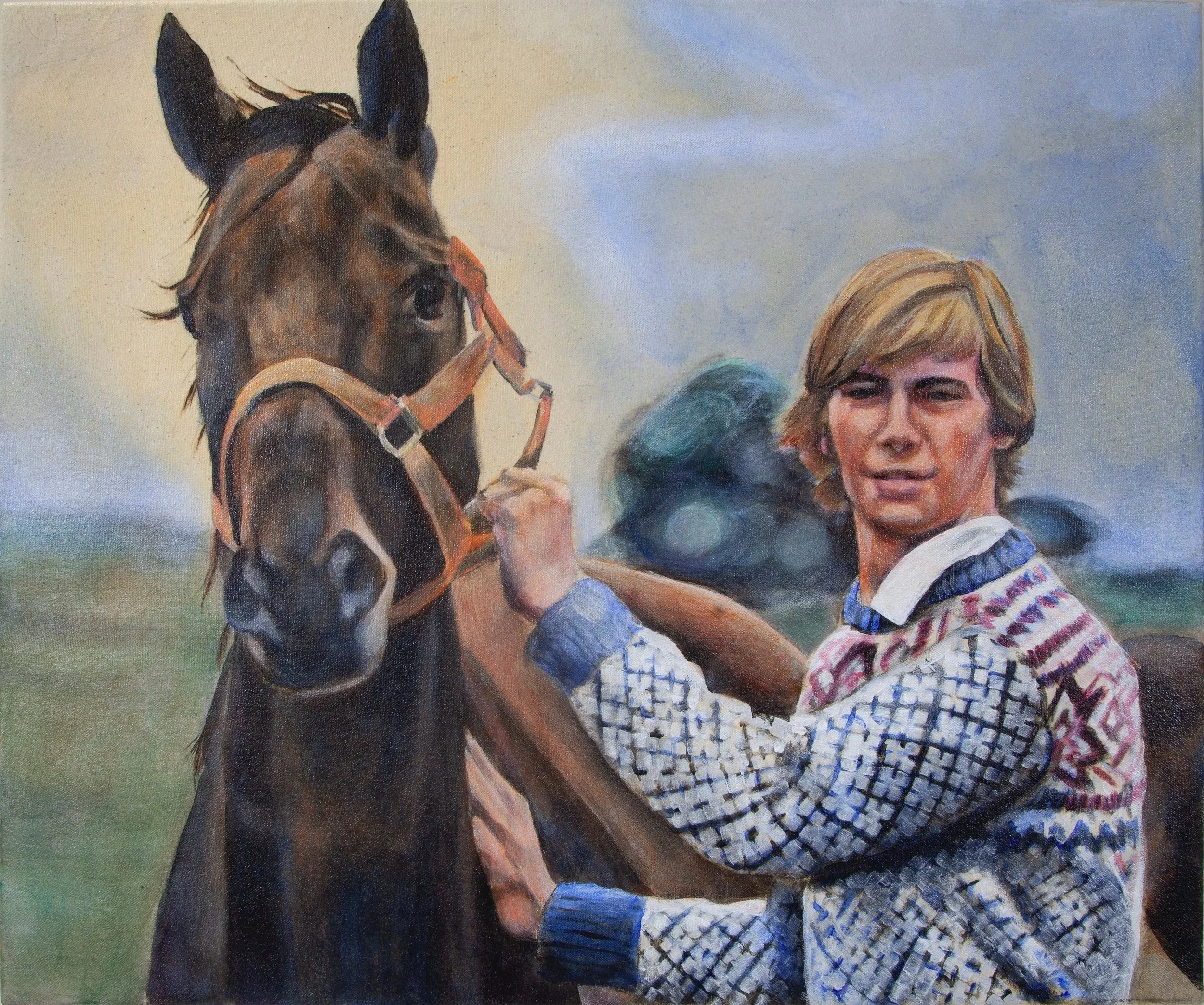
Blue Eyed Boys, November 2025, stained canvas via saffron flower, acrylic paint
Blue Eyed Boys is a meditation on connection, transformation, and the quiet ways nature holds our histories. Based on a photograph of Hixson's father; an image he grew up studying, admiring, and imagining himself growing into.. this painting is both a tribute and a continuation of the bond they shared. Among his six children, Hixson resemble him the most. That likeness has always carried an unspoken thread between them. After his passing in March, that thread felt both more fragile and more vital than ever.
The piece began with a canvas dyed using natural materials, allowing the surface itself to hold the presence of the natural world. This choice reflects the different yet parallel ways his father and him connected to nature; his love for animals, and Hixsons love for plants. In merging these materials with his image, Hixson wanted the painting to become a place where both of their paths shall meet again, where what he loved and what Hixson love coexist.
Using acrylics, he worked entirely through glazing and layered color rather than traditional mixing. This slow accumulation of transparent tones became a metaphor for memory; how understanding builds over time, how grief and love overlap, how a person’s presence lingers in layers rather than single moments.
The most important element of the painting is the gesture of his father gently touching the horse. It embodies who he was; soft-spoken, kind, and deeply tender toward the beings he cared for. In honoring that gentleness, Hixson hoped to preserve not only his likeness, but the spirit that shaped his earliest ideas of love, strength, and connection.
Blue Eyed Boys is ultimately a work about becoming, how they are shaped by those who came before us, how nature offers a place for transformation, and how art can keep us connected even after loss.